

In Minecraft, creating slopes is a core skill for terrain modification and architectural design, directly impacting the visual appeal and functional utility of your game world. Whether you’re crafting natural hillsides, building fortifications, or designing functional structures, mastering slope techniques can significantly improve building efficiency. This article uses an FAQ format to answer common questions and provide practical methods, helping players progress from basics to advanced skills. All techniques are based on reliable game data to ensure ease of use and effectiveness.
How do I manually create a basic slope in Minecraft?
Manual slope creation is the most fundamental method, suitable for simple terrain or small-scale builds. Start with the core outline, stacking blocks to form the incline: Choose a starting point, like a pillar or wall, and gradually stack blocks upward, ensuring a height difference of half a block or one full block per level to simulate a natural slope. For example, when making a spiral staircase, place slabs or stairs around a central pillar, increasing the height with each layer, and leave space at the bottom to prevent collapse. Operate by standing on a lower step and placing blocks towards the higher level to avoid structural conflicts. For architectural shaping, prioritize designing a rectangular frame as the base and work from the top down to control the overall outline, ensuring smooth slope lines. Use materials like oak wood or stone bricks to enhance stability and prevent damage from mobs stepping on it. This method is simple and efficient, ideal for beginners to achieve a sloped effect quickly. However, be mindful not to make the slope too steep to avoid an abrupt visual appearance.
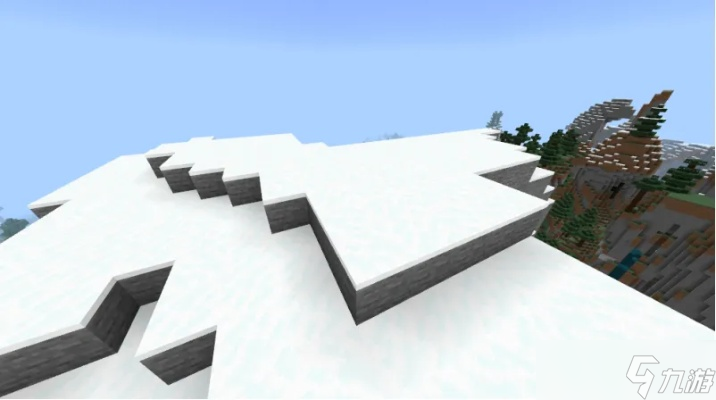
How do I create natural hillside terrain?
Natural hillsides emphasize blending with the environment, requiring the use of existing terrain features for an organic transition. Location selection is key: prioritize cliff edges or river bends, as these areas have inherent natural slopes that are easier to modify into defensive or aesthetic hills. For example, when building on a cliff, embed the foundation 1-2 blocks into the rock face, using a combination of double-layered cobblestone and chiseled stone bricks to reduce explosion damage and weathering effects. Create depth through overhang designs, such as using stone brick stairs and wooden trapdoors, to form a layered slope and enhance defensive functionality. For integrating with water systems, build a 3-block high stone embankment next to a river, using smooth stone bricks at the base to reduce water flow resistance, and adding inverted stairs on top to prevent climbing, while leaving controlled water channels. Mid-slope areas can be tiered, for instance, by setting up watchtowers, living areas, and farmland, utilizing elevation changes to create gentle slopes and improve practicality. An advanced method involves using tools like Axiom or similar terrain editors: import a heightmap (grayscale image where brightness determines height) and apply brush tools with falloff/smoothing functions. Use controls like Ctrl+Click to adjust custom heights, simulating realistic hillside gradients. This method can quickly generate complex terrain but requires familiarity with the tool’s interface to avoid over-reliance on automation leading to unnatural results.
How are slope structures applied in architecture?
Slopes in architecture are often used to enhance both functionality and aesthetics, such as in roofs, entrances, or defense systems. In medieval-style builds, slopes are combined with natural textures: design suspended walkways on cliff edges using stone brick stairs as a base, placing trapdoors every 3 blocks to form closable ramps; or build zigzag wooden bridges at river bends, decked with dark oak planks and leaving arrow slits, serving both as a passage and a defensive front line. For functional structures like water elevators, slopes can be implemented using water: on a two-block wide wall face, place signs alternately to block water flow, add glass walls for enclosure, and fill the interior with water to create a stationary column. The player enters and presses the spacebar to ascend, with each block providing an air pocket. The slope angle is controlled by the placement of the signs to ensure smooth movement. Architectural outlines should follow shaping principles: start building from the top down from key elements (like the main frame), using a minimum 5x5x5 space unit for detailing, ensuring the slope harmonizes with the overall structure. Avoid using a single material; mix cobblestone and oak wood to add textural detail. This application enhances a building’s practicality but requires testing the slope angle to prevent player movement issues.
How can advanced techniques optimize slope generation?
Advanced methods utilize tools and algorithms to efficiently generate complex slopes, suitable for large-scale projects. The core of tools like Axiom is heightmap control: create a grayscale image (where brightness determines height) and use brush functions like “smooth” or “raise” to generate hillsides. Combine this with noise application tools to add randomness, simulating natural erosion effects, such as sparse tree distribution on hilltops. For optimization, limit height ranges: use custom masks to set slope thresholds (e.g., 60 degrees), ensuring steep areas use stone and gentle slopes use grass. During operation, use folder auto-refresh to preserve existing work while adding new elements, avoiding redundant effort. Defensive slopes can integrate Redstone mechanisms: design hidden piston doors at cliff entrances, connected to the main structure for an escape route; or use oak trapdoors at water embankments to automatically regulate water levels, enhancing interactivity. These techniques reduce manual labor but require prior planning to avoid resource wastage.
Common Issues and How to Solve Them?
Common problems during slope construction include structural collapse, unnatural appearance, or functional failure. Structural collapse is often due to unstable materials or foundations: ensure the foundation is embedded into the terrain (e.g., 1-2 blocks into a rock face) and reinforce it with double-layered materials (cobblestone plus chiseled stone bricks); prevent mob interference by placing barriers near farmland or slopes. If the appearance looks(abrupt/unnatural), use grayscale heightmaps or noise tools to add random details, like sparse trees on a hilltop; or mix materials (like mossy cobblestone walls) to enhance a natural feel. Functional issues, like a water elevator failing, require checking if signs are placed closely and alternately to ensure still water; if the slope causes poor movement, adjust the step height difference to half-blocks and test for smooth player traversal. Preventive advice: use manual stacking for small projects, employ tools for batch processing large terrains, and always back up your save files.


