

Basic Chest Crafting Method
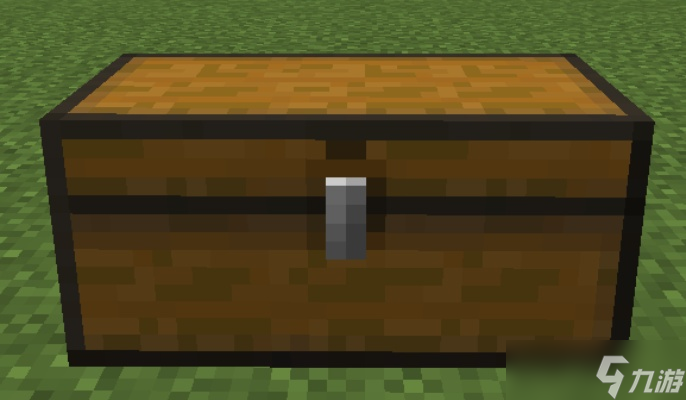
In Minecraft, the basic chest is the earliest craftable storage facility. Crafting requires 8 planks (any wood type works), arranged in a ring around the center slot in a crafting table. Each basic chest provides 27 inventory slots. Placing two chests side-by-side merges them into a large chest, increasing capacity to 54 slots. However, ensure no non-transparent blocks are directly above the chests to allow merging.
The crafting process can be divided into three key stages:
- Material Collection: Chop down trees to obtain logs. Each log can be crafted into 4 planks using a crafting table.
- Crafting Table Setup: Craft a crafting table using 4 planks to serve as your crafting base.
- Chest Synthesis: Arrange 8 planks in a ring layout. Note that chests made from different wood types have different appearances but identical functionality.
Basic chests can be stacked for spatial expansion, but note that chests must be placed at least one block apart, otherwise adjacent chests cannot be opened.
Upgraded Chest Crafting Tutorial
Storage devices with larger capacities can be obtained through material upgrades in-game:
Iron Chest
Crafted by surrounding a basic chest with 8 iron ingots in a crafting table, increasing capacity to 45 slots. Iron ingots are obtained by smelting iron ore, recommended to be mined in concentrated areas below Y-level 16.
Gold Chest and Diamond Chest
A gold chest requires 8 gold ingots surrounding a basic chest, providing 54 slots. A diamond chest requires 8 diamonds, further expanding capacity to 63 slots. These rare materials are typically found deep underground, with diamonds having the highest spawn probability between Y-level -58 and -64.
Double-Capacity Chest
This is the ultimate solution in the upgrade path, with the most complex crafting process:
- First, craft a diamond chest as the base.
- Craft a Redstone Chip: requires 4 units each of redstone dust and quartz dust.
- Finally, place the Redstone Chip into the diamond chest to complete the upgrade, doubling the capacity directly to 126 slots.
Special Function Storage Devices
Beyond regular chests, players can also craft storage devices with special functions:
Automatic Pop-out Refrigerator
Composed of a dispenser, iron blocks, an iron door, and a button:
- Place a dispenser on the ground and store food inside.
- Stack iron blocks above it with an iron door attached to the wall.
- Install a button on the side of an iron block; pressing it automatically ejects food.
Hollow Storage Cabinet
A decorative storage facility constructed using campfires and barrels:
- Use a 2×2 array of campfires as the base.
- Place uncooked food on them, then extinguish the fires with a shovel.
- Add a barrel and trapdoors on top, combining aesthetics and utility.
Glass Display Case
A transparent storage device suitable for showcasing collectibles:
- Dig a trench in the ground and fill it with snow layers (a combination of 2-layer and 6-layer snow).
- Place an armor stand and mob heads inside.
- Use pistons and glass panes to form a sealed display space.
Infinite Storage System Construction
For players obsessed with resource collection, infinite storage systems can completely solve space anxiety:
Basic Infinite Storage Device
Core components include a large chest, hoppers, rails, and minecarts with chests:
- Place a large chest in the center, connect a hopper to its right side.
- Lay rails above the hopper and place a minecart with chest on them.
- Each additional minecart with chest expands capacity by 27 slots, theoretically allowing for infinite expansion.
Fully Automatic Infinite Storage Device
An advanced solution incorporating Redstone circuits requires:
- Redstone lamps, Redstone repeaters, sticky pistons
- Hoppers, experience bottles, Redstone torches
The crafting steps are divided into four phases:
- Automatic Door Machine: Set up a chest-hopper-Redstone torch linkage system within a 3×3 wall space.
- Storage Mechanism: Construct a circulation system using experience bottles and Redstone circuits.
- Device Integration: Fully connect the storage unit with the transmission (channel).
- System Testing: Input items to verify automated operation.
Storage Space Management Tips
Efficient storage space management can significantly enhance the gaming experience:
Categorization System
It is recommended to divide storage areas into the following categories:
- Building materials (cobblestone, wood, etc.)
- Food and agricultural products
- Ores and valuable resources
- Tools, weapons, and armor
- Redstone components and special items
Labeling and Identification
Use item frames, signs, or different colored wool to mark chest categories. For infinite storage systems, it is recommended that each independent device store only a single item type, managing multiple items by (horizontal stacking).
Space Optimization Plans
- Embed chests into walls to save floor space.
- Centralize storage in basements for easier protection.
- Use water stream transport systems to achieve automatic item sorting.
- Back up important (materials/supplies) to avoid accidental loss.
Frequently Asked Questions
Q: Why can’t the chest be opened?
A: Usually because there is a block obstructing the space above the chest. Remove the obstacle to restore normal function.
Q: How to transfer items quickly?
A: Hold the item stack, aim at the chest, and press Shift + Right-click to quickly deposit the entire stack.
Q: What is the disadvantage of infinite storage systems?
A: A single device can only store one type of item, requiring significant space for横向扩展 (horizontal expansion).
Q: Which upgraded chest offers the best value?
A: The iron chest offers a good balance between material cost and capacity increase, suitable for mid-game players.
Q: How to prevent chests from being destroyed?
A: On multiplayer servers, you can lock chests, or use Shulker Boxes to back up important物资 (materials/supplies).


